Among the troop was a young monkey named Kato, barely past infancy himself. Curious, energetic, and sometimes too bold for his own good, Kato was known for his playful mischief. Whether chasing insects or swinging recklessly from one tree to another, he often forgot how precarious life in the canopy could be. His mother watched him constantly, always torn between giving him freedom and protecting him from his own daring spirit.
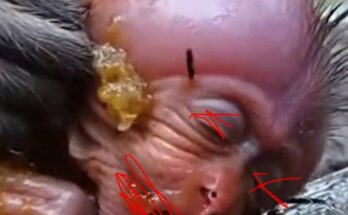
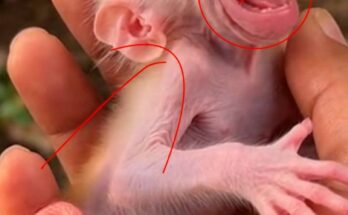
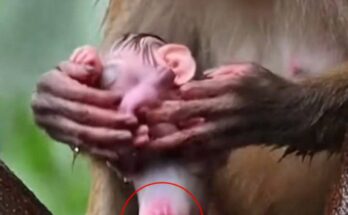
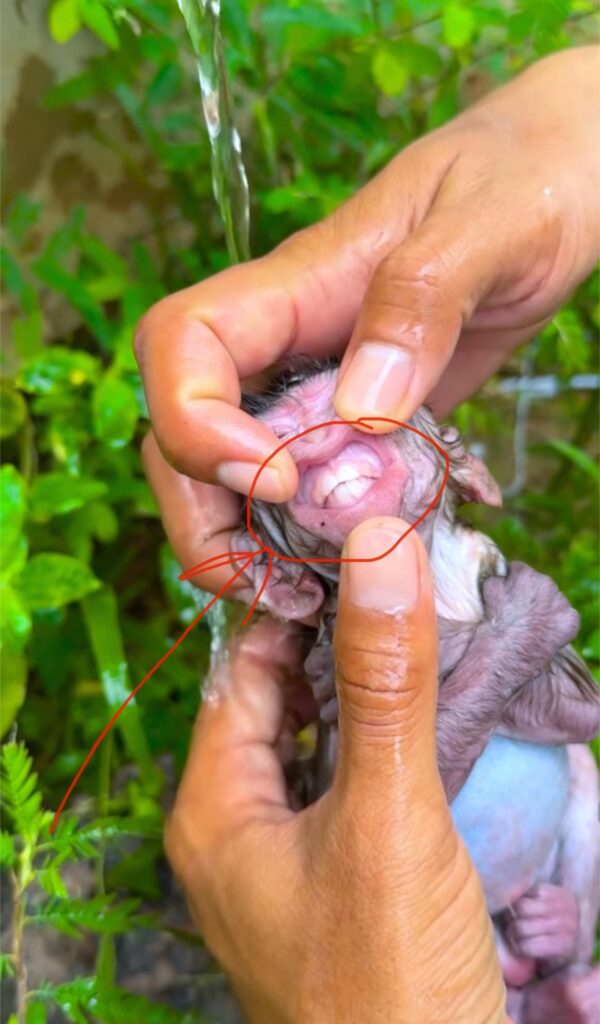
One morning, the troop gathered in a large banyan tree where a newborn monkey had been welcomed just days earlier. The tiny infant clung weakly to its mother’s chest, still adjusting to the brightness of the world. The others in the troop approached with gentle curiosity—sniffing, grooming, and quietly acknowledging their newest family member, as is common in monkey social life.
But Kato, excited by the attention surrounding the baby, decided he wanted a closer look too. Curious youngsters often come near newborns to learn social behaviors, but they must do so gently. Kato, however, was still learning. His understanding of boundaries and responsibility had not yet taken shape.
As he approached, he reached out to touch the newborn. At first, the mother tolerated his closeness; after all, young monkeys often learn how to behave by interacting with infants under supervision. But Kato’s energy began to rise. He tugged playfully at the baby’s tiny arm, not realizing how fragile a newborn truly is.
The mother gave a soft warning call, but Kato was too excited to understand it. In a sudden moment of misjudgment, he loosened the baby’s grip from its mother’s fur. The newborn slipped down several inches, dangling dangerously above the open air beneath the branch. The forest floor was far below—far enough that even a short fall could have meant disaster.
Instantly, the calm of the morning shattered.
The mother lunged forward with a sharp cry, grabbing her baby just in time. Other troop members rushed in, surrounding Kato and pushing him back gently but firmly. Their scolding calls echoed through the branches, making it clear that his behavior had crossed a boundary. Though not malicious, his mistake could have had serious consequences.
Kato froze, startled and confused. He didn’t understand why the troop, which normally embraced him, was suddenly upset. His mother approached him next—not with anger, but with a mix of discipline and reassurance. She pulled him close, grooming his fur in slow, deliberate strokes. Grooming is a powerful bonding behavior among monkeys; it communicates comfort, correction, and connection all at once.
As she worked through his fur, she kept her newborn safely tucked beneath her other arm. This moment was more than discipline; it was a lesson. Kato, still trembling slightly from the tension, began to understand that newborns require gentleness, patience, and care. His eyes followed the tiny infant’s movements, now safely secured. Something changed in him—an awareness that had not been present before.
For the rest of the day, Kato stayed close to his mother. He watched how the adults handled the newborn: slow touches, careful grooming, protective positioning. He learned by observing, as young monkeys do, absorbing the unspoken rules of family and responsibility.
By evening, the troop settled in a new resting place. The forest hummed with cicadas and rustling leaves, and the newborn slept peacefully. Kato remained nearby, calmer now, occasionally glancing at the baby with a newfound understanding.
Life in the wild is full of risks, but it is also full of learning. Young animals make mistakes—that is how they grow. Kato’s misstep, though frightening, became a crucial lesson that shaped his behavior. In the days that followed, he became one of the gentler young monkeys in the troop, even helping to groom and watch over the newborn as it grew stronger.
Nature’s balance is delicate, and every creature must learn its role within it. For Kato, the near-accident became a turning point—a lesson in responsibility, compassion, and the importance of protecting the most vulnerable among them.