Luma was barely past adolescence herself, still full of the carefree energy that defined her age—leaping through branches, racing with her friends, testing the boundaries of her world. Responsibility was something she had never known, and motherhood was the farthest thing from her playful mind. But nature, ever unplanned and unasked, placed a new life into her hands.
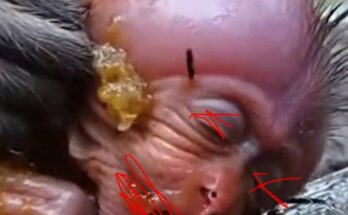
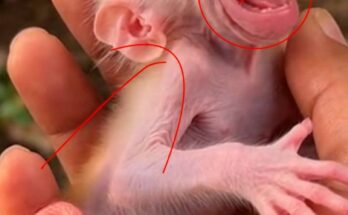
One misty morning, under the shelter of a giant fig tree, Luma gave birth to her first baby. The newborn, tiny and trembling, blinked into the world with wide, searching eyes. While the rest of the troop celebrated with excited hoots and curious sniffs, Luma sat frozen—her breath shallow, her hands unsteady. The instincts that usually guided monkey mothers seemed absent in her. Instead of joy, she felt fear, confusion, and overwhelming pressure.
The troop noticed her hesitation. Older mothers eyed her with concern; others drifted away, unsure how to help. The baby whimpered softly, reaching out its fragile arms, but Luma flinched, unsure of what to do. She worried she wasn’t strong enough. She worried she might hurt it. She worried the troop would judge her. Fear twisted her heart tighter and tighter.
In the animal kingdom, a mother’s uncertainty can become a dangerous moment. The baby needed warmth, milk, and protection. Without them, its tiny heartbeat would fade. Realizing she could not give what was needed, Luma began distancing herself from the newborn. The troop watched in quiet despair, understanding the peril the tiny baby faced.
But nature had also gifted this troop with another kind of mother—wise, calm, and deeply experienced. Her name was Tali, the oldest female in the group. She had raised many babies of her own and supported countless young mothers. Observing from the branches above, she knew immediately what was happening in Luma’s frightened mind.
Climbing down slowly, Tali approached the newborn with gentle, deliberate steps. She groomed its tiny fur, letting the baby’s scent settle in her nose. Then she turned to Luma.
No words were exchanged—monkeys didn’t need them. Instead, Tali made soft reassurance calls and held her body low, signaling peace. She nudged the newborn closer to Luma, not forcing, not demanding—just offering.
Luma trembled, her eyes darting from the baby to Tali. She wanted to run. She wanted to hide. But she also felt something else—something deeper, instinctive, a soft tug in her chest that she couldn’t ignore.
The baby’s tiny fingers curled around the fur on Luma’s arm.
And in that instant, something changed.
Her fear didn’t disappear completely, but it softened just enough for courage to slip through. Luma leaned down, touching her nose to her baby’s forehead. The troop stilled, waiting. Then, with a hesitant but growing certainty, Luma reached out and lifted her newborn into her chest.
A moment of hope washed over the forest.
Tali chattered softly in approval. The troop relaxed, some grooming each other in relief, others simply watching the young mother rediscover her strength. Luma held the baby close, feeling its heartbeat slow into a steady rhythm. The warmth between them grew, and with it came a sense of connection she had never experienced before.
Over the next hours—and then the next days—Tali stayed near, guiding Luma with quiet mentorship. She taught her how to cradle the baby, how to nurse safely, how to keep the newborn close while moving through the branches. Luma learned quickly, her confidence blooming like sunlight through leaves.
Soon, she could be seen proudly carrying her baby through the treetops, grooming it tenderly, shielding it with her small but determined body. The fear that once consumed her had transformed into a fierce, protective love.
The forest, always watching, always listening, seemed to celebrate the miracle. Life had been fragile, but it had been saved—not just by instinct, but by guidance, patience, and the quiet wisdom of community.
And so, the baby lived—not just because it was strong, but because someone believed the mother could be too.