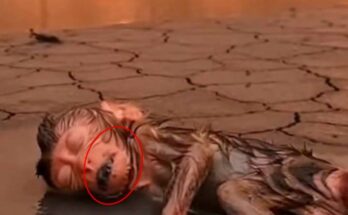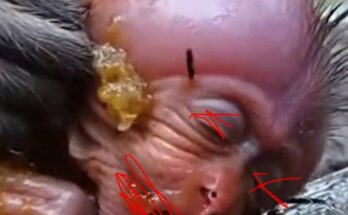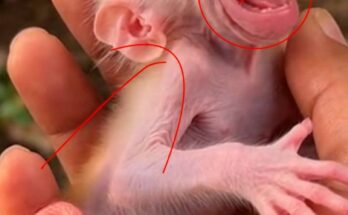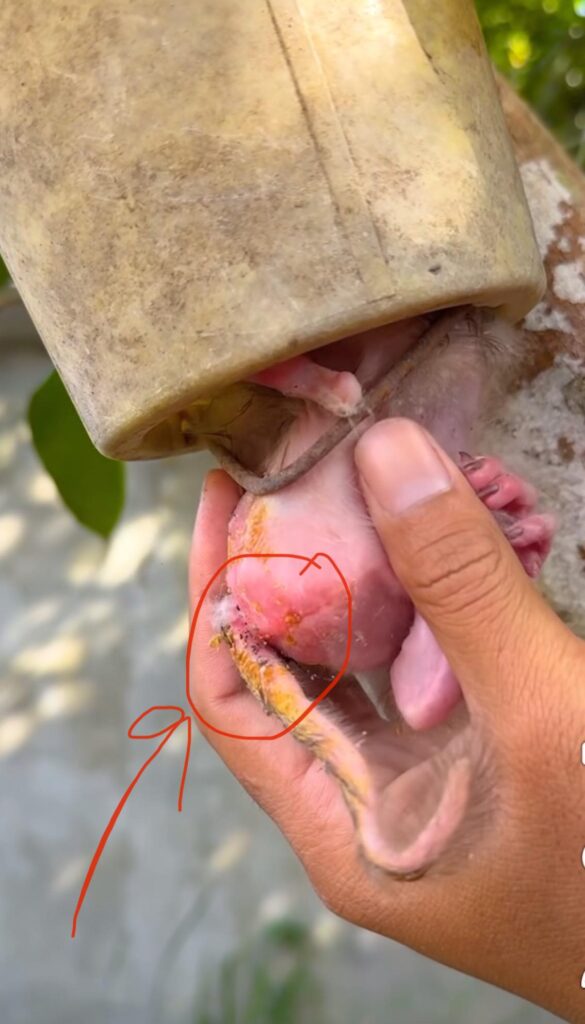
Poaching is often imagined as an active hunt, but in reality, many animals are harmed by traps left unattended for days or even weeks. These traps do not discriminate. They capture whoever passes by—adult or infant, predator or prey. For a newborn monkey, still dependent on its mother for warmth, milk, and protection, such a trap can mean separation, suffering, and often death. The forest, once a place of safety, becomes a maze of invisible threats.
The mother monkey’s distress is heartbreaking. Monkeys are highly social and emotionally intelligent animals, forming strong bonds within their groups. When an infant is trapped, the mother may stay nearby, calling out and attempting to help, yet unable to free her baby. This emotional trauma, though rarely documented, is real and deeply damaging. The loss of a single infant can affect not only a mother but the stability of the entire troop.
This incident also highlights how human actions disrupt natural balance. Poachers often set traps to catch larger animals, usually for illegal wildlife trade or bushmeat. However, the unintended victims—like newborn monkeys—are frequently ignored. These deaths are rarely recorded, making the true scale of the problem difficult to measure. What remains unseen is the slow erosion of wildlife populations, one trap at a time.
Newborn animals are especially vulnerable. They lack strength, awareness, and mobility. When they are injured or separated from their mothers, survival chances drop sharply. Even if rescued, many infants struggle to recover due to stress, malnutrition, or the absence of maternal care. Wildlife rescue centers work tirelessly to rehabilitate such animals, but they cannot replace the safety of a natural upbringing in the wild.
The quiet nature of this crisis is what makes it so dangerous. Unlike deforestation or wildfires, poaching traps leave no obvious scars on the landscape. They blend into the forest floor, continuing their harm long after the poacher has gone. This silence allows the problem to persist with little public attention or urgency.
Yet there is hope. Conservation groups, forest patrols, and local communities are working together to remove traps, monitor wildlife, and educate others about the consequences of poaching. When local people are empowered to protect their forests, wildlife has a better chance of survival. Awareness is a powerful tool—every story shared brings visibility to animals that cannot speak for themselves.
The newborn monkey caught in a poacher’s trap represents more than a single tragedy. It symbolizes countless unseen victims and reminds us that even the smallest lives matter. Protecting forests is not just about preserving trees, but about safeguarding the fragile beginnings of life that depend on them. If we listen closely, the forest is telling us a story—one that calls for responsibility, compassion, and action before more lives are trapped in silence.