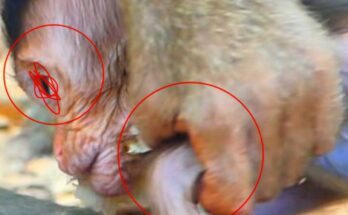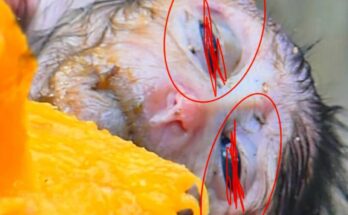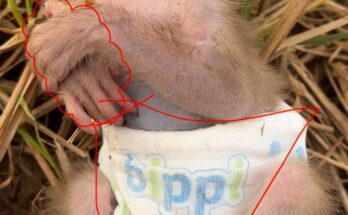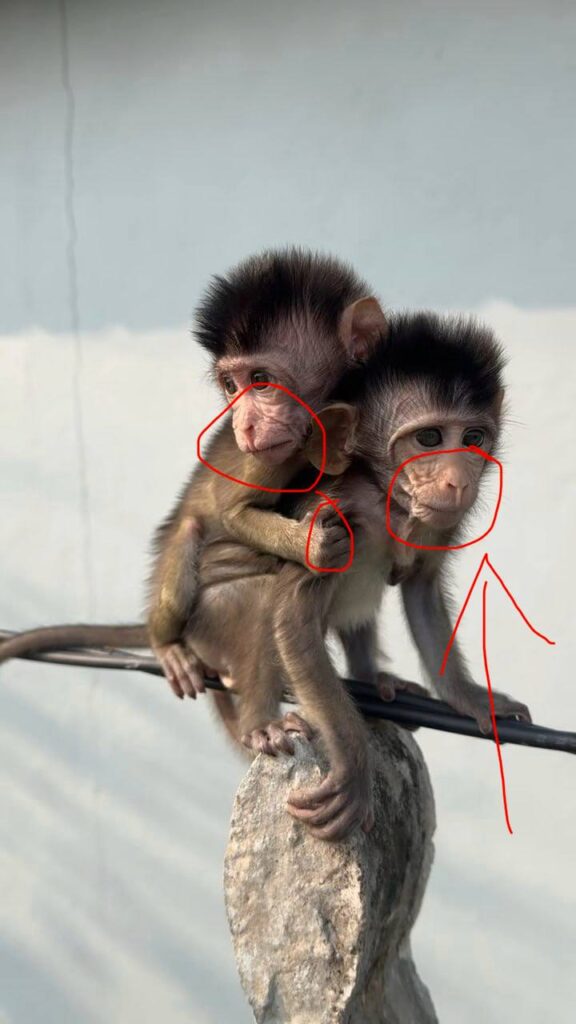
A heartbreaking incident involving a baby monkey has drawn attention to the fragile relationship between wildlife and human activity. The young monkey was discovered alone on a hot tin roof, exhausted and frightened, after its mother was killed while searching for food. The event highlights the growing dangers animals face as natural habitats shrink and encounters with humans become more frequent.
The mother monkey had reportedly ventured closer to human settlements in search of food, a behavior increasingly common as forests are cleared and resources disappear. For many wild animals, finding enough to eat has become a daily struggle. Crops, trash, and food scraps near villages often seem like the only option for survival. Sadly, these encounters can end in tragedy, as they did in this case.
When the mother was shot, the baby was left completely defenseless. Infant monkeys rely on their mothers for warmth, protection, nourishment, and guidance. Without her, the young monkey had no understanding of danger and no ability to find food or water on its own. In panic and confusion, the baby wandered and eventually ended up on a metal rooftop under the sun, where temperatures can rise quickly and become life-threatening.
Witnesses later noticed the small monkey trembling and crying, clearly distressed. Unable to climb down safely or find shelter, it remained exposed to the heat. Situations like this often go unnoticed, and many orphaned animals do not survive long enough to be rescued. The survival rate for young wildlife without parental care is extremely low.
This incident is not an isolated one. Around the world, animals are increasingly forced into risky situations because of habitat loss, deforestation, and urban expansion. When forests disappear, animals lose not only their homes but also their natural food sources. As a result, conflicts between humans and wildlife become more common, often with devastating outcomes for animals.
Conservationists and animal welfare groups stress that education and coexistence are key to preventing such tragedies. Simple actions, such as securing waste, protecting green spaces, and responding to wildlife encounters with compassion rather than fear, can save lives. In many regions, wildlife rescue teams work tirelessly to rehabilitate orphaned animals and, when possible, return them to safe environments.
The story of this baby monkey serves as a painful reminder that animals feel loss and fear, even if they cannot express it in words. Each incident reflects a larger issue that goes beyond a single life. It asks humans to consider how their actions impact the creatures that share the planet with them.
Protecting wildlife is not only about saving animals; it is about maintaining balance in nature. When one life is lost, especially a parent, the effects ripple outward. By choosing understanding over violence and conservation over destruction, such tragedies can be reduced.
This young monkey’s experience urges society to look more closely at the consequences of human expansion and to take responsibility for safeguarding the voiceless lives affected by it.