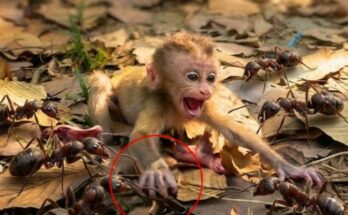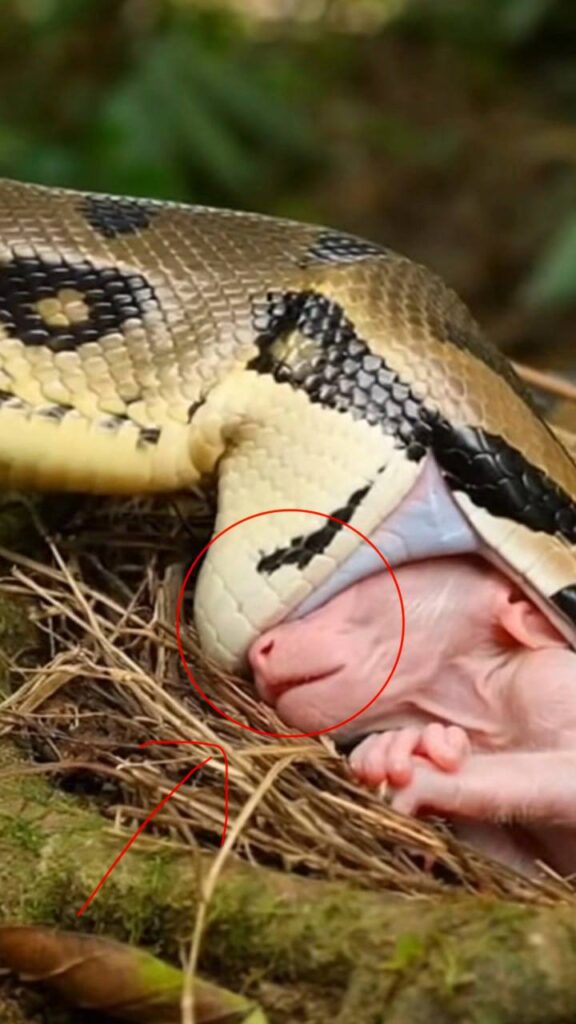
Nearby, a baby monkey clings to a low branch, curious and unaware of the danger below. The jungle is loud with birds and insects, but the python moves without sound. In a sudden moment, faster than the eye can follow, the snake strikes. Its strength is overwhelming, driven purely by instinct and survival.
For the python, this is not cruelty—it is necessity. As one of the rainforest’s apex predators, it plays a vital role in maintaining balance within the ecosystem. Without predators like pythons, prey populations could spiral out of control, damaging the fragile environment they all depend on.
The scene is difficult to witness, especially when it involves such a young animal. Baby monkeys represent innocence and vulnerability, which makes moments like this emotionally challenging for humans to process. Yet in the wild, there are no villains or heroes—only life sustaining life.
After the struggle ends, the python retreats back into the shadows, its meal allowing it to survive for weeks or even months. The jungle continues on, indifferent and relentless. Leaves rustle, birds call, and the cycle of life moves forward as it always has.
Nature is beautiful, brutal, and honest all at once—and moments like these remind us that the wild follows its own rules, untouched by human emotion.