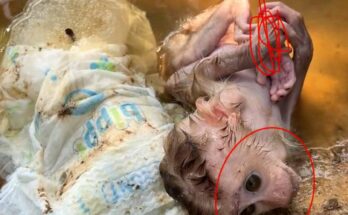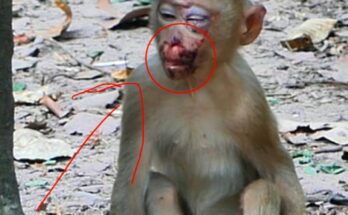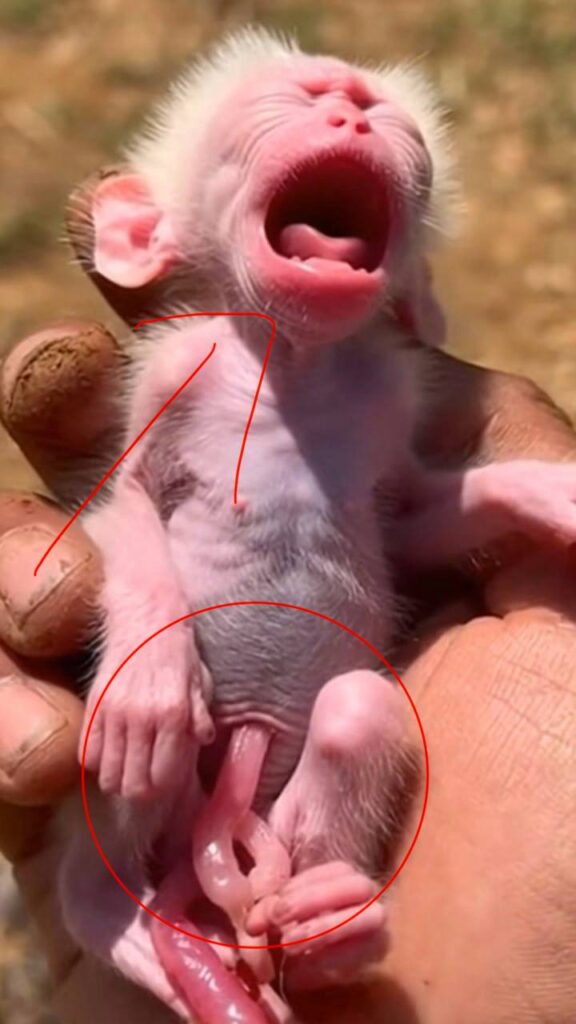
When rescuers first noticed the baby monkey, it was weak and trembling. Its small hands clung desperately to a branch as if it knew that letting go meant losing its last connection to safety. The animal’s eyes showed a mixture of fear and confusion. It had not yet learned how to find food on its own, nor how to protect itself from the dangers of the wild.
Wildlife rescuers understand that time is critical in situations like this. A baby monkey that goes too long without nourishment can quickly become dehydrated and dangerously weak. Immediate care is essential. The team carefully approached the frightened animal, moving slowly so they would not cause additional stress.
Once safely rescued, the tiny monkey was wrapped gently in a soft cloth to keep it warm. Just like human babies, young monkeys need warmth and comfort to stabilize their bodies when they are weak or sick. The rescuers checked its breathing, hydration, and overall condition to ensure it had not suffered serious injuries.
Next came one of the most important steps: feeding. Since the baby monkey was too young to forage on its own, rescuers prepared a special milk formula designed to provide the nutrients it needed. Using a small bottle, they slowly fed the infant while monitoring its response. At first, the baby hesitated, but hunger soon overcame its fear, and it began to drink.
With every small sip, the monkey regained a little strength. Its tiny body relaxed, and its grip softened as it felt the comfort of warmth and nourishment. These small improvements were hopeful signs that the infant had a chance to recover.
However, rescue is only the first step in a long process. Baby monkeys require continuous care, including regular feeding, medical observation, and emotional comfort. In the wild, a mother monkey would carry her baby almost constantly. Without that contact, rescued infants can become stressed and anxious.
To help replicate the comfort of a mother’s presence, caregivers often use soft blankets or stuffed animals that the baby monkey can cling to. This simple method helps reduce stress and provides a sense of security while the animal grows stronger.
Veterinarians also examine rescued wildlife to ensure there are no hidden illnesses or injuries. Young animals are particularly vulnerable to infections, parasites, and malnutrition. Careful medical supervision ensures the monkey receives proper treatment if any health problems appear.
As the baby monkey grows stronger, rehabilitation becomes the next focus. Caregivers gradually introduce natural foods such as fruit, leaves, and small insects. The goal is to prepare the monkey for eventual independence.
Whenever possible, wildlife rehabilitation centers also attempt to reunite orphaned babies with their families or integrate them into social groups of their own species. Social interaction is vital for monkeys, who are highly intelligent and deeply social animals.
This story of rescue highlights the important work of wildlife caregivers around the world. Their dedication saves countless animals that would otherwise have little chance of survival.
But it also reminds us of something bigger: the responsibility humans have to protect wildlife and their habitats. Deforestation, illegal pet trade, and human expansion continue to threaten many primate species. Protecting forests and respecting wildlife helps ensure animals like this baby monkey have a safe place to live and grow.
For this tiny monkey, immediate care made all the difference. What began as a desperate struggle for survival slowly became a story of hope. With patience, compassion, and proper care, the small life that once trembled alone in the forest now has a chance to thrive again.