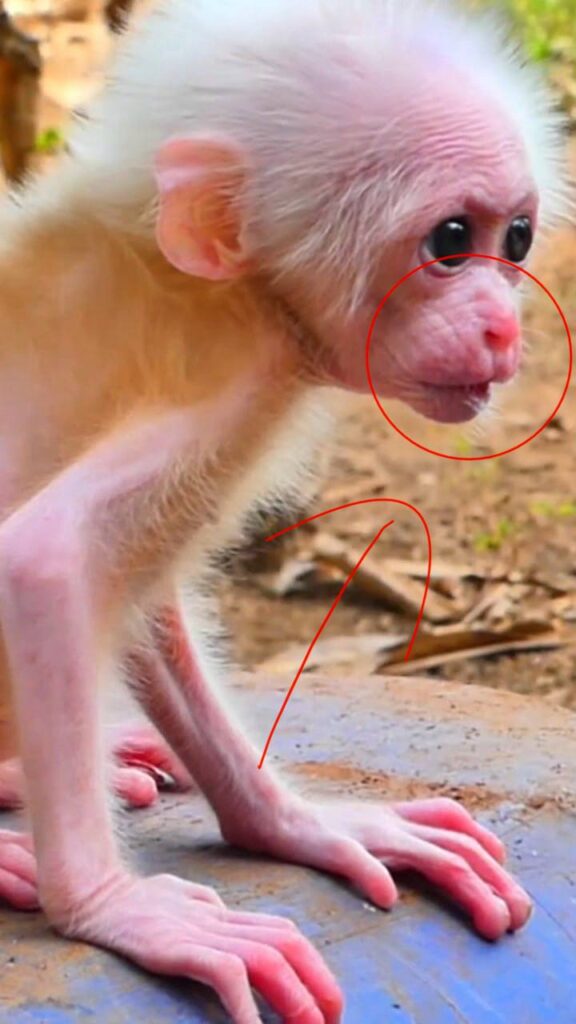
Baby monkeys are among the most delicate and vulnerable creatures in the animal kingdom. When they are born, they are extremely small and depend almost entirely on their mothers for survival. A baby monkey that is having a hard time often shows clear signs of needing comfort, warmth, and protection. At such an early stage of life, the presence of its mother is not just important—it is essential.
In the wild, a mother monkey plays many roles for her baby. She provides milk for nourishment, keeps the baby warm by holding it close to her body, and protects it from predators or other dangers. The baby usually clings tightly to its mother’s fur as she moves through trees or across the ground. This close contact helps the baby feel safe and secure while it learns about the world around it.
When a baby monkey becomes separated from its mother, life becomes very difficult. Because it is still so small and weak, it cannot find food, stay warm, or defend itself on its own. Without its mother nearby, the baby may become frightened, hungry, and exhausted. Even simple tasks, such as moving around or finding a safe place to rest, can become overwhelming challenges.
A mother’s presence also helps the baby monkey learn important survival skills. By watching and following her, the baby learns how to climb, search for food, and interact with other monkeys in the group. These lessons are crucial for the baby’s development and future independence.
For a tiny monkey struggling in its early days, the comfort of its mother is the greatest support it can have. Her care, protection, and guidance give the baby the strength it needs to grow, explore, and eventually thrive in the wild.