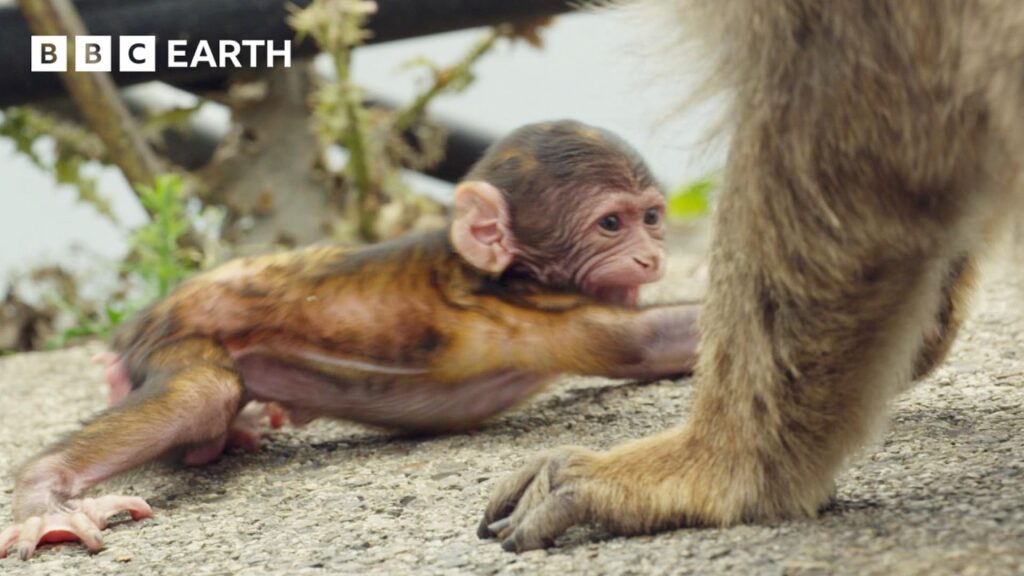
In the dense social jungles of macaque societies, politics is not exclusive to humans. A fascinating behavior among macaques reveals just how sophisticated their social intelligence can be. When adult macaques find themselves on the outs with former allies, they often turn to an unexpected diplomatic tool: baby monkeys.
This phenomenon, observed and documented by primatologists and wildlife experts, involves the strategic use of infants to smooth over tensions and rebuild fractured relationships. Much like a politician might bring a child to a campaign stop to soften their image, macaques use baby monkeys as social “currency” to navigate their complex social hierarchies.
The behavior typically unfolds after a conflict or falling-out between two adult macaques, often females. These animals live in tightly knit groups where social cohesion is critical. Fights, while not uncommon, can lead to disrupted alliances and stress within the troop. In order to restore peace, one macaque will approach the other while gently holding or presenting a baby—either their own or occasionally someone else’s. The infant becomes a peace offering, a buffer that reduces the likelihood of aggression and encourages reconciliation.
Scientists believe this interaction works because baby macaques are seen as socially neutral and universally appealing. Like humans, macaques are drawn to babies, responding to their small size, soft features, and vulnerability. When a baby is present during a tense encounter, the emotional tone shifts. What might have been a hostile confrontation becomes a moment of tenderness and curiosity.
These “baby borrowing” moments don’t just rebuild social bridges—they also reinforce the importance of community and mutual trust within the group. The use of infants in this way shows an understanding of emotional manipulation and social optics. It suggests that macaques are capable of empathy, foresight, and even strategic planning—traits we often associate with human political behavior.
Interestingly, this tactic isn’t limited to reconciliation. Macaques sometimes use babies to gain access to food, grooming, or safer resting spots by cozying up to higher-ranking individuals while holding infants. In many cases, simply being near a baby increases a macaque’s social value, temporarily lifting their status in the eyes of others.
These insights come from long-term studies, such as those conducted on rhesus and Barbary macaques, where researchers have spent years observing and documenting social interactions. The findings challenge traditional notions of what separates human social behavior from that of other primates.
Ultimately, the way macaques use babies as social tools underscores a key truth in the animal kingdom: relationships matter. For macaques, as for humans, maintaining alliances, repairing rifts, and understanding group dynamics are vital for survival. And in the world of primate politics, sometimes the smallest players—the babies—wield the most power.