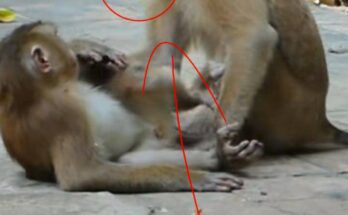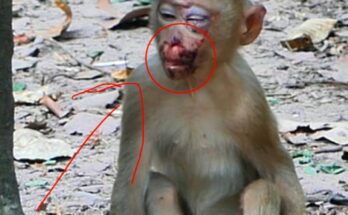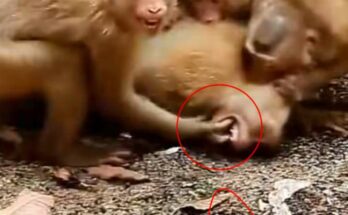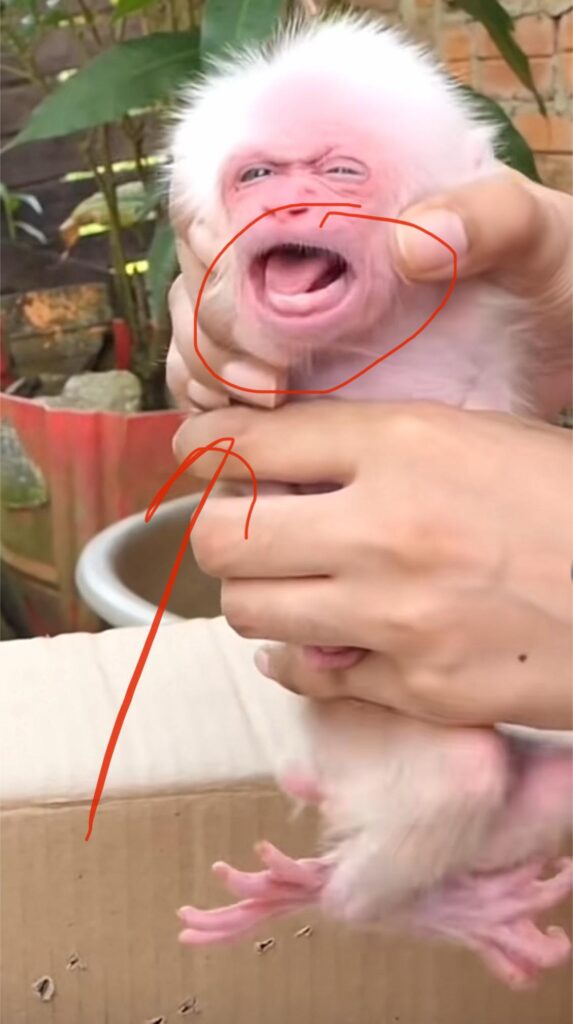
Nature is often seen as gentle and beautiful, but sometimes it can be unexpectedly harsh—especially for the smallest and most vulnerable creatures. One such heartbreaking moment unfolded when a cute newborn baby monkey suffered a painful injury after being bitten by aggressive red ants, while its mother could do nothing to help.
The baby monkey was only a few days old, still fragile and completely dependent on its mother for warmth, protection, and nourishment. Its tiny body clung closely to her, trusting her instinctively as mothers are trusted in the wild. However, even a mother’s strongest instincts cannot always protect her child from every danger nature presents.
Red ants are small, but they are known for their painful bites and strong venom. When threatened, they attack in groups, overwhelming their target quickly. Unfortunately, the baby monkey was resting near an ant nest hidden beneath leaves and soil. Before the mother realized the danger, the ants began to swarm.
The baby monkey cried out in distress, its tiny movements showing clear signs of pain and fear. The mother monkey panicked. She tried to brush the ants away, shaking her arms and moving frantically. But red ants are persistent, and the more she moved, the more aggressive they became. Any attempt to help seemed to make the situation worse.
Witnesses to the scene described it as emotionally overwhelming. The mother monkey’s face showed fear and confusion as she tried to protect her baby without harming it herself. Unlike larger predators, ants cannot be easily chased away. The mother had no understanding of how to stop the bites, and this helplessness made the situation even more tragic.
The baby monkey’s skin, extremely sensitive at such a young age, reacted badly to the venom. Swelling and redness appeared quickly around the bite areas. Each cry from the baby echoed the harsh reality of survival in the wild, where danger can come from even the smallest creatures.
Eventually, the mother managed to move away from the nest, carrying her injured baby to a safer place. She groomed the baby gently, licking the affected areas in an instinctive attempt to soothe the pain. While this behavior shows deep maternal care, it could not fully undo the damage already done.
In the wild, animals do not have access to medical treatment. Recovery depends entirely on strength, resilience, and sometimes luck. For newborn animals, survival is especially uncertain. A minor injury that might seem insignificant to humans can become life-threatening for a baby animal.
This incident highlights how fragile life truly is in nature. While people often focus on dramatic encounters with large predators, many animals face their greatest threats from insects, infections, or environmental hazards. Red ants, though tiny, play a powerful role in the ecosystem—and can be deadly to young animals.
The emotional bond between the mother monkey and her baby was unmistakable. Despite her inability to fully protect her child, she never abandoned it. She stayed close, holding the baby tightly, offering warmth and comfort. This powerful display of maternal love reminds us that emotions such as care, fear, and devotion are not limited to humans.
Stories like this serve as a reminder of both the beauty and cruelty of the natural world. They encourage compassion and awareness, especially when humans encounter wildlife. Respecting natural habitats and being cautious not to disturb animal environments can sometimes prevent such tragic encounters.