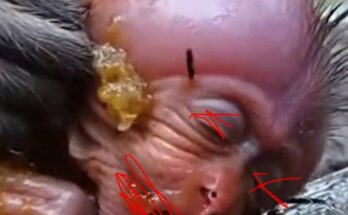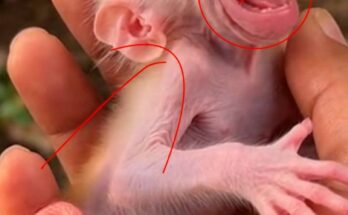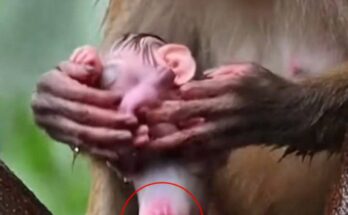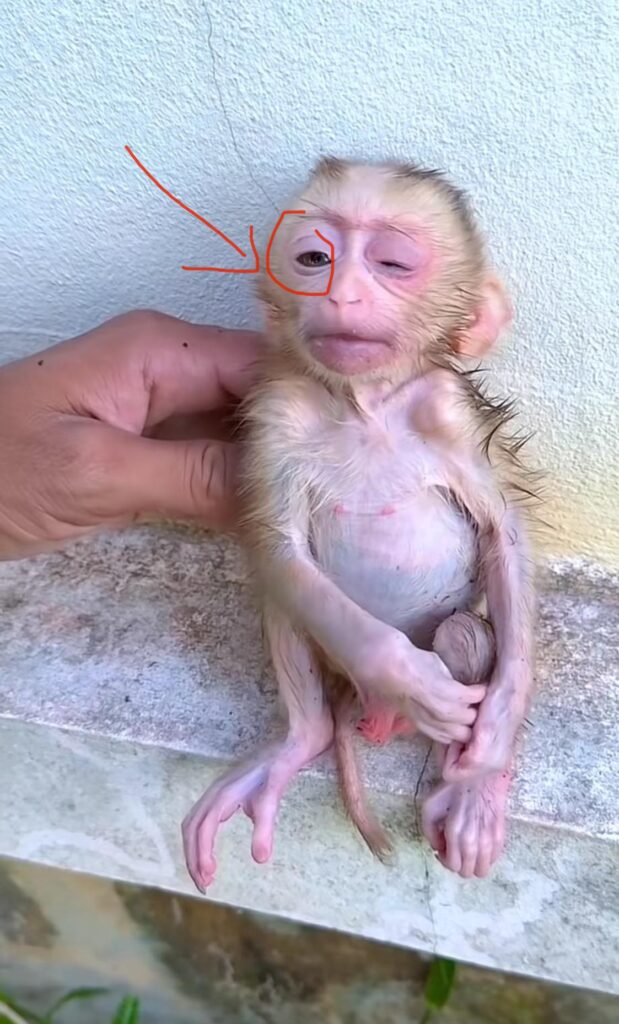
The baby, only moments old, is impossibly small—its fingers curled tightly, its fur still wet, and its eyes squeezed shut. Though tired from its very first moments of life, the newborn clings instinctively to its mother’s chest, searching for warmth and reassurance. Its faint, soft breaths rise and fall against Loura’s heartbeat, forming the first bond that will define their earliest days together.
But while the beginning of this life should be filled with the comfort of nursing and the nourishment that every newborn needs, Loura faces an unexpected challenge. After the difficult birth, she has no milk to feed her little one. Her body, exhausted and overwhelmed, cannot yet provide what her baby desperately seeks. The tiny infant, already tired and weak, nuzzles its mother repeatedly, guided by instinct but unable to find the milk it needs to regain strength.
Loura tries her best—holding the infant close, grooming it gently, wrapping her arms protectively around the small body. Her loyalty as a new mother is clear in every movement. She rocks slightly, whispering soft grunts of reassurance. But each time the newborn attempts to nurse, it grows more fatigued. Its tiny head droops; its grip loosens; its breathing becomes slower. The peaceful forest around them feels heavier, as though nature itself is waiting to see what happens next.
The caregivers at the sanctuary notice the situation quickly, having watched Loura throughout her pregnancy. They see the baby struggling, its little body shivering with effort and exhaustion. While Loura tries to soothe her infant, she cannot produce the nourishment needed. The caregivers step in carefully, understanding how delicate these first moments are. They prepare warm supplemental milk, something safe and suitable for a newborn monkey, and approach with slow, gentle movements so Loura will not feel threatened.
Loura hesitates at first. She clutches her baby tightly, unsure of the humans’ intentions. Her instincts as a mother flare up—she must protect her newborn. But gradually, she begins to understand that help is being offered, not danger. With patience and soft reassurance, the caregivers gain her trust. They provide the milk to the baby slowly, drop by drop. The newborn, exhausted and trembling, responds to the warm nourishment with weak but hopeful movements.
As the baby begins to swallow the supplemental milk, a wave of relief spreads across the scene. Loura watches closely, her eyes following every small moment of recovery. Bit by bit, the infant gains a little more strength. Its breathing becomes more stable. Its grip tightens around Loura once again. Though still tired, the newborn is no longer fading; instead, it is beginning the gradual climb toward life and strength.
Loura, regaining confidence, grooms her baby lovingly, warming it with her body. The caregivers stay close, monitoring from a respectful distance, prepared to offer more help as needed. This gentle cooperation between mother and humans becomes the newborn’s lifeline in its first critical hours.
In the days that follow, the baby continues receiving supplemental milk while staying constantly in Loura’s arms. Her maternal instincts are strong—she protects, cleans, and comforts her child with unwavering devotion. Although she cannot nurse naturally yet, her presence provides the emotional and physical security the baby needs. Slowly, with proper care, warmth, and nourishment, the tiny newborn begins to show signs of growth: stronger cries, brighter eyes, and more determined movements.
This touching moment—captured in the full video after the birth—shows not just the fragility of new life but also the power of compassion. It’s a heartfelt story of a mother monkey doing everything she can, a newborn pushing through its exhaustion, and humans stepping in with kindness to support them both. The journey is a reminder of how deeply all living creatures share the instinct to love, protect, and survive.