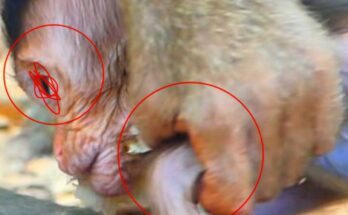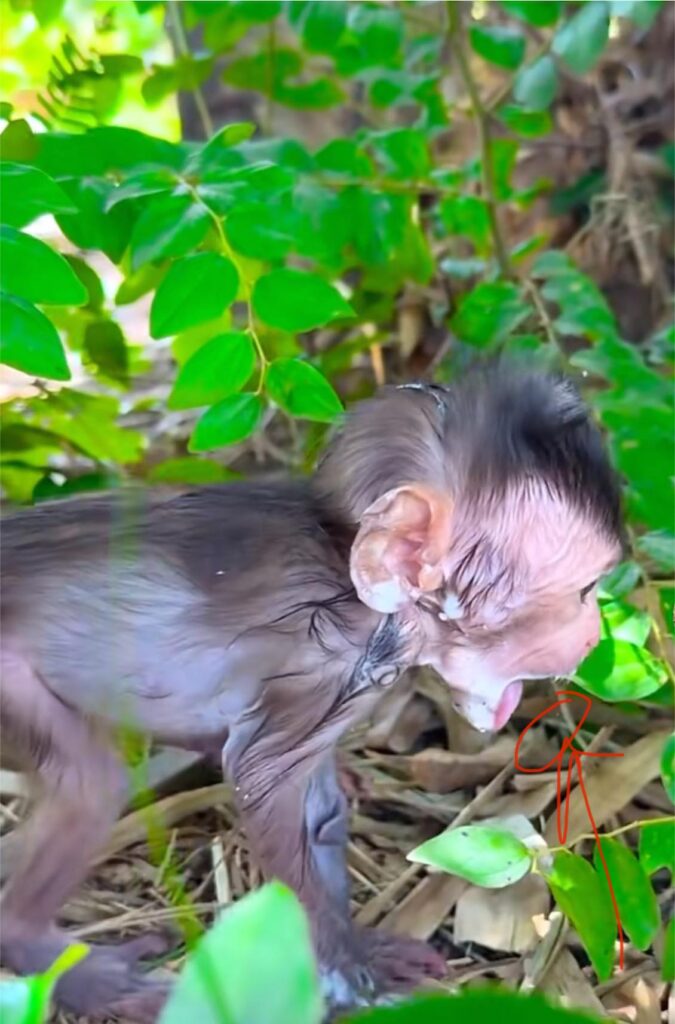
The mother monkey, guided by instinct and the timeless rhythm of nature, knows it is time for her little one to take the next step toward independence. She understands that the baby must begin eating solid foods, learning to forage, and practicing the skills that will ensure its survival in their unpredictable world. Though her instincts push her forward, her heart pulls her back. She senses the resistance, the fear, and the longing in her baby’s cries.
Each attempt she makes to separate herself is tinged with hesitation. She moves a step away, hoping the baby will follow her lead, yet the little one clings more tightly, overwhelmed by confusion and distress. The forest echoes with soft but desperate wails—cries that reveal how deeply the young monkey has grown attached to the comfort, warmth, and safety that only a mother can provide.
The mother tries various gentle strategies, nudging the baby to explore, offering bits of food, and positioning herself just out of reach—all subtle ways to guide the little one toward the next phase of life. Yet each effort is met with tears, protests, and frantic attempts to cling to the familiar. The scene becomes a subtle tug-of-war between necessity and affection, between growth and comfort.
Watching this interaction reveals more than just animal behavior. It exposes the emotional layers woven into motherhood across species. The mother’s face shows moments of guilt, concern, and determination. She pauses, looks back, and sometimes gives in, allowing the baby another moment of closeness before trying again. Her actions are not cold or dismissive—they are measured, thoughtful, and full of a kind of love that seeks to prepare rather than shelter.
Eventually, the baby monkey begins to understand the message, though not without continued resistance. Its cries soften into whimpers, then into cautious curiosity as it tastes new foods or takes a few tentative steps on its own. The mother remains watchful, her presence still a comforting anchor. She does not abandon her baby; instead, she guides from a slight distance, ready to step in if true danger appears.
This emotional push-and-pull reveals the universal truth that growing up is not just a process but a journey filled with difficult transitions—for both parent and child. The mother monkey’s struggle echoes the bittersweet milestones many human parents recognize: the first day of school, the first night a baby sleeps alone, the moments when a child asserts independence while still wanting reassurance.
The emotional weight of the scene lies in its raw honesty. It is heartbreaking to witness the baby’s tears, yet equally heartbreaking to see the mother forced to deny the comfort she instinctively wants to provide. But beneath the pain is a deeper beauty: the understanding that love isn’t only about holding on—it is also about letting go at the right time.
This mother monkey’s actions embody an ancient wisdom that transcends species. She teaches that independence must be learned, even when the path feels uncomfortable. She shows that compassion and firmness can coexist. And she reminds us that every step toward growth often begins with a moment of heartbreak.