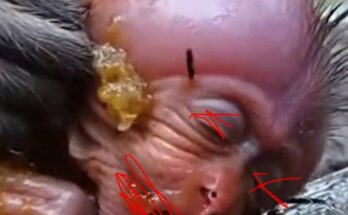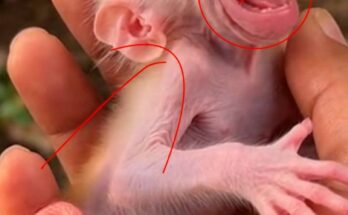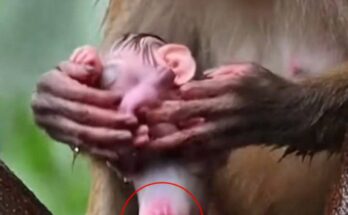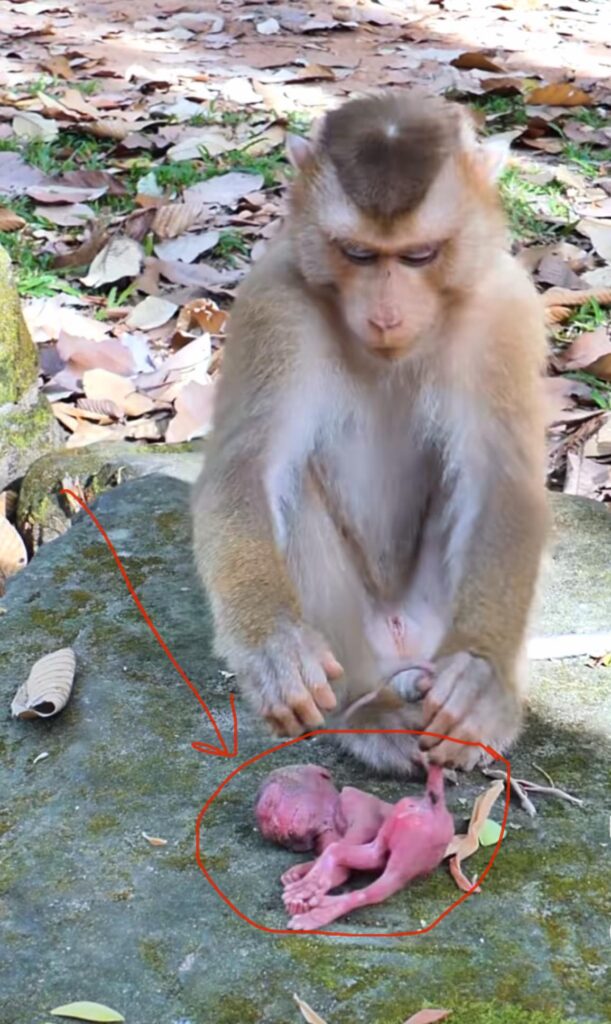
The baby monkey was sad and cried a lot because the time for weaning had come. Little Kiko had always clung tightly to his mother’s soft fur, nursing whenever he felt sleepy, scared, or simply wished for comfort. For Kiko, his mother’s warmth was the center of his tiny world. But now, the elders of the troop had announced that all the young monkeys who had turned six moons old must begin to eat solid food. Weaning time had arrived, and Kiko didn’t feel ready at all.
Each morning, Kiko watched his friends nibble on tender leaves or peel sweet fruits. They seemed excited, proud even, to grow into their new phase of life. But Kiko felt none of that excitement. He wanted things to stay the same. He wanted to curl up in his mother’s arms and drink the milk that had always soothed him. Every time he tried to take a bite of food, he wrinkled his nose and pushed it away.
His mother, Mara, understood his feelings, but she also knew the importance of letting him grow. “Kiko,” she said gently, brushing a leaf from his fur, “you are getting stronger every day. New foods will help you climb higher, jump farther, and play longer. Milk was for when you were tiny, but now you are becoming a young monkey.”
“I don’t want to be a young monkey,” Kiko sniffled. “I want to stay little.”
Mara kissed the top of his head. “You can still be little in my heart. But you must also learn to be brave.”
But bravery felt too big for Kiko. Instead of trying, he cried. He cried when he woke in the morning, and he cried again when everyone gathered to eat. He cried so often that even the parrots complained from the treetops, squawking, “Too loud! Too loud!”
One afternoon, after another failed attempt at breakfast, Kiko wandered away to sit alone on a thick branch overlooking the river. The water sparkled below, and fish darted between the rocks. As he watched them, he noticed something interesting—each baby fish swam on its own. They did not cling to their mothers, nor did they wait for someone to feed them. They darted through the water confidently, as though they knew exactly where they needed to go.
“How do they do that?” Kiko wondered aloud.
A deep, calm voice answered from behind him. “All young ones learn at their own pace.” Kiko turned to see Elder Tanu, the oldest monkey in the troop, sitting beside him. Tanu’s fur was silver and his eyes warm with understanding.
“I’m scared,” Kiko admitted, voice trembling. “What if I can’t do it? What if the new food tastes bad? What if I get hungry and there’s no milk?”
Elder Tanu chuckled softly. “Do you know, little one, that I cried just as loudly as you when I was your age? I thought weaning would be the hardest thing I would ever face. But life is full of moments where we feel unsure. Each one prepares us for something greater.”
Kiko looked down at his tiny hands. “But how do I start?”
“By taking one small bite. That is all.”
Tanu plucked a soft, ripe fig from a nearby branch and handed it to him. “This was my favorite when I was young.”
Kiko hesitated, the familiar fear bubbling in his chest. But with Elder Tanu’s gentle encouragement and the comforting presence of the river below, he brought the fig to his mouth and took a timid bite.
Sweetness burst across his tongue—warm, soft, bright like sunshine. Kiko’s eyes widened. “It’s good!”
Tanu nodded proudly. “See? You were brave.”
Kiko took another bite, then another, until the fig was gone. For the first time in days, he didn’t feel like crying. He felt something new—hope.
That evening, Kiko returned to the troop. His mother greeted him with a smile. “Did you eat today, little one?”
Kiko nodded shyly. “A fig.”
Mara wrapped her arms around him. “I’m proud of you.”
And so, bit by bit, day by day, Kiko learned to enjoy his new foods. He still missed the comfort of nursing, but he discovered new strengths too—jumping higher, climbing faster, and feeling just a little braver with each new taste.
He didn’t stop being little in his mother’s heart. But he did start growing in his own way—and that made him smile, not cry.