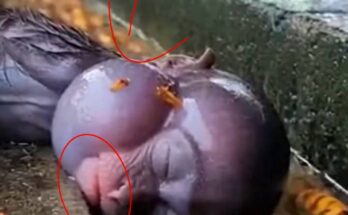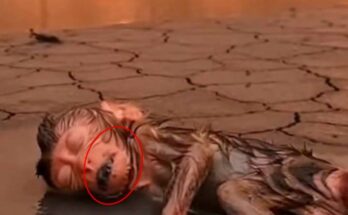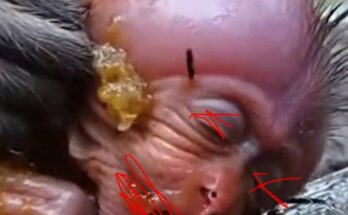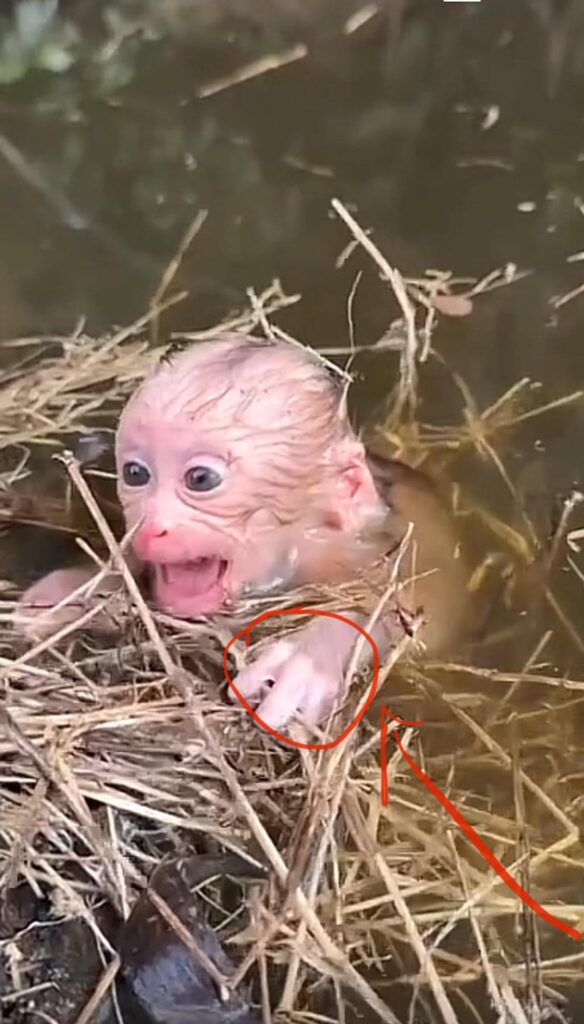
The journey from birth to the first crawl is filled with growth and milestones. Like all young creatures, baby monkeys are born dependent on their mothers for warmth, nourishment, and protection. In the early weeks of life, a baby monkey will cling tightly to its mother, relying on her for everything from feeding to safety. This bond is essential for survival and helps the infant develop the emotional and physical strength needed for the challenges ahead.
As time passes, the baby’s muscles grow stronger, and its coordination improves. Crawling is one of the first signs that a monkey is beginning to gain independence and mobility. It’s a crucial step in their development, as it marks the transition from complete reliance on their mother to exploring the world on their own. Each tiny, awkward movement is a testament to the baby monkey’s determination and the innate desire to explore.
It’s incredible how quickly a baby monkey learns to coordinate its movements. At first, it may struggle to find balance, wobbling and swaying with every attempt. Yet, the baby never gives up. It takes time, patience, and plenty of practice. What may seem like a simple task to an adult monkey is actually a significant accomplishment for the baby. Each successful crawl is met with excitement and a sense of achievement, both for the baby and its onlooking family members.
Monkeys are known for their intelligence and social structure. As the baby begins to crawl, it is often encouraged and observed by its family. The mother plays a critical role in guiding and reassuring the infant. While the baby attempts to crawl, the mother may nudge it gently or provide a comforting presence. The other members of the troop, often older siblings or other relatives, may also keep an eye on the little one, offering support when needed. This communal care is a hallmark of monkey societies and plays an important role in the development of young monkeys.
The crawling phase is just one of many stages in the life of a young monkey. After the crawling stage, the baby will eventually start walking and climbing with increasing confidence. As it grows, it will become more adept at navigating the environment, using its hands and feet to climb trees, swing from branches, and explore its surroundings. The skills that the baby monkey develops during this time will help it survive in the wild, where agility and coordination are key to finding food and avoiding predators.
The baby monkey’s first crawl is not only a moment of physical achievement but also a sign of emotional growth. Crawling symbolizes the monkey’s growing curiosity about the world and its desire to venture beyond the safety of its mother’s embrace. The first attempts at crawling are often met with moments of uncertainty and hesitation, but the baby learns quickly that each movement brings it closer to new experiences and discoveries.
Watching a baby monkey crawl is a beautiful reminder of the natural wonders that surround us. It’s easy to forget that even the smallest creatures experience the same triumphs and challenges as we do. Whether it’s a baby monkey or a human child, the act of crawling is an essential milestone that signifies growth, independence, and the beginning of a new chapter in life.
The adorable sight of a baby monkey taking its first crawl is an emotional moment, not just for the mother and the rest of the troop, but also for anyone fortunate enough to witness it. It is a reminder that no matter how small or seemingly insignificant the moment may be, it is filled with meaning and promise for the future.
As the little monkey progresses in its journey, crawling becomes just one part of its adventure into the larger world. And while the crawling itself may seem simple, it’s the beginning of something far more extraordinary — a young life full of growth, challenges, and endless possibilities. The story of a baby monkey’s first crawl is one of resilience, wonder, and the beauty of life’s earliest milestones.