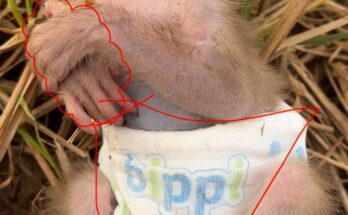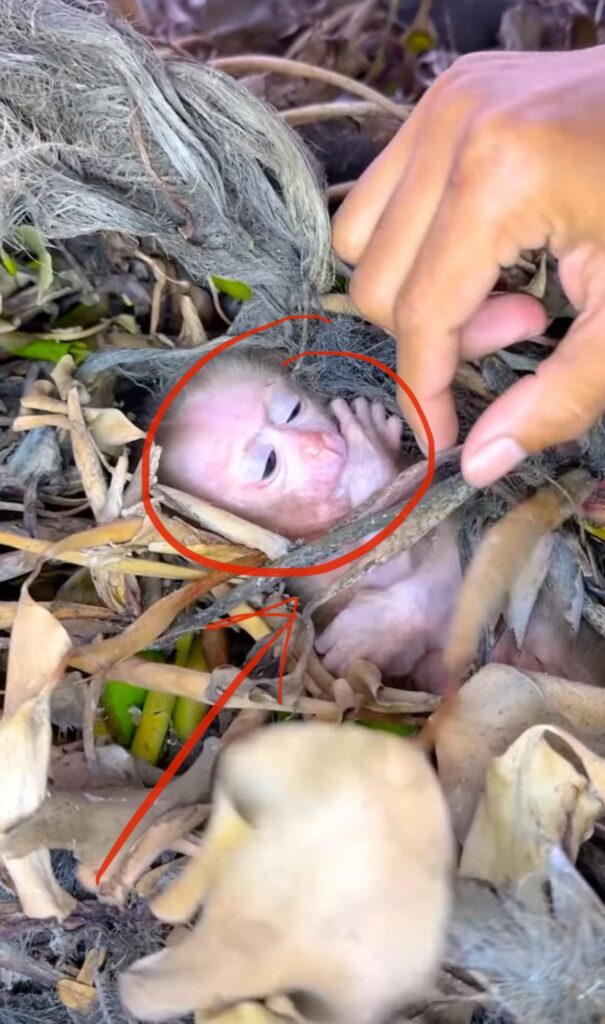
Life in the wild is unpredictable, especially for newborn animals. For a baby monkey entering the world under harsh conditions, survival is never guaranteed. This story begins in an unlikely place—cold, muddy ground after a heavy rainfall—where a newborn monkey faced overwhelming odds from its very first moments of life.
The infant was born during a storm that turned the forest floor into thick mud. Weak and unable to move on its own, the newborn struggled to cling to life. Its body was small and fragile, and without immediate care, the environment alone posed a serious threat. Cold temperatures, damp conditions, and the absence of shelter made survival extremely difficult. For newborn monkeys, warmth and protection are essential, and without them, even a short period can be dangerous.
Fortunately, the baby was not entirely alone. Its mother, though exhausted and stressed by the harsh conditions, stayed close. Mother monkeys play a vital role in their infants’ survival, offering warmth, nourishment, and constant protection. Despite the challenging surroundings, she cleaned the newborn and kept it close to her body to preserve heat. This simple act became the baby’s first lifeline.
As hours passed, the situation remained uncertain. The mud made movement difficult, and predators were a constant concern. Newborn monkeys cannot defend themselves or escape danger. They depend entirely on their caregivers to keep them safe. The mother’s alertness and determination helped keep threats at bay while she searched for a safer place to rest.
The next challenge was feeding. Newborn monkeys rely on frequent nourishment to maintain strength and support development. In stressful situations, this process can be disrupted. However, through persistence and instinct, the mother ensured the baby received what it needed. Each successful feeding helped the newborn regain energy and stabilize its fragile body.
Over the following days, the weather slowly improved. The mud dried, and the forest returned to its normal rhythm. With better conditions, the baby monkey began showing small but important signs of recovery. Its movements became stronger, its grip more secure, and its cries more energetic. These changes marked a turning point—from mere survival to the possibility of growth.
This story is a powerful reminder of resilience in the natural world. Newborn animals face immense challenges, and even small environmental changes can determine their fate. Survival often depends on a combination of instinct, care, and timing. In this case, the mother’s dedication and adaptability played a crucial role in overcoming adversity.
The newborn’s survival also highlights the importance of healthy habitats. When natural environments are protected, animals have a better chance to respond to challenges like extreme weather. Conservation efforts that preserve forests, reduce human disturbance, and support wildlife populations help ensure that vulnerable newborns have the opportunity to survive and thrive.