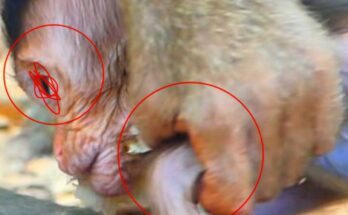
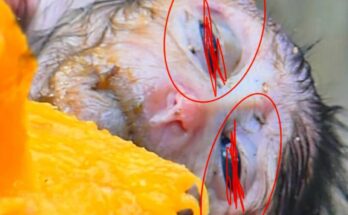
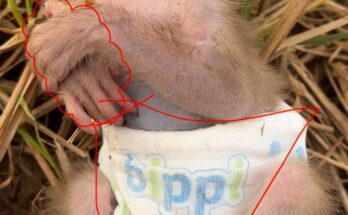
Newborn monkeys, like human infants, rely heavily on their mothers and their immune defenses are not yet fully formed. Their skin acts as a protective barrier, but at birth it is thin, sensitive, and easily damaged. Even small cuts, insect bites, or abrasions can become entry points for bacteria, fungi, or parasites. When these microorganisms enter the body through the skin, they can multiply quickly and overwhelm the infant’s defenses.
One of the main reasons skin infections can be deadly is how rapidly they can spread. What begins as redness, swelling, or a small sore can progress into a widespread infection if not treated promptly. In newborn monkeys, bacteria can enter the bloodstream through infected skin, leading to a serious condition known as sepsis. Sepsis affects the entire body and can interfere with vital organs such as the heart and lungs. Because newborns are small and weak, their bodies often cannot cope with this level of stress.
Another critical factor is dehydration and energy loss. Skin infections often cause discomfort and pain, which may prevent a newborn monkey from nursing properly. If the infant stops feeding or feeds less often, it can quickly become dehydrated and malnourished. Since newborn monkeys need frequent nourishment to maintain body temperature and energy levels, even short periods without feeding can be life-threatening.
Environmental conditions also play a major role. In the wild, newborn monkeys are exposed to humidity, dirt, insects, and parasites. Warm and moist environments are ideal for bacteria and fungi to grow. If a mother monkey is unable to keep the infant clean or if the group lives in overcrowded conditions, the risk of infection increases. In captivity, poor hygiene, unclean enclosures, or delayed veterinary care can similarly raise the chances of severe skin infections.
The mother’s health is another important factor. If the mother is stressed, malnourished, or sick, her milk may provide fewer immune protections to the newborn. Normally, mothers pass antibodies to their babies through nursing, helping them fight infections during their early days of life. When this transfer is limited, newborn monkeys become even more vulnerable to diseases, including those that begin on the skin.
Prompt treatment can make a significant difference. Mild skin infections can often be treated with proper cleaning and medication when detected early. However, in many wild settings, infections may go unnoticed until the newborn’s condition becomes severe. By that point, the infection may have already spread internally, making recovery much more difficult. This is why monitoring newborn primates is so important in both conservation areas and research facilities.
From a conservation perspective, the death of newborn monkeys due to preventable infections is a serious concern. Many monkey species already face threats such as habitat loss, climate change, and human activity. Losing infants to infections reduces population growth and can endanger already vulnerable species. Wildlife veterinarians and conservationists work to reduce these risks by improving habitat conditions, minimizing stress, and providing medical care when possible.
In conclusion, yes, a skin infection can cause the death of newborn monkeys, especially when it spreads rapidly or goes untreated. Their weak immune systems, sensitive skin, and dependence on regular feeding make them particularly susceptible to even minor infections. By understanding the causes and risks of skin infections, humans can take better steps to protect newborn monkeys and support their survival, whether in the wild or in managed care.