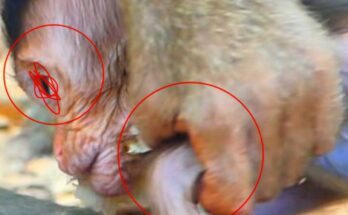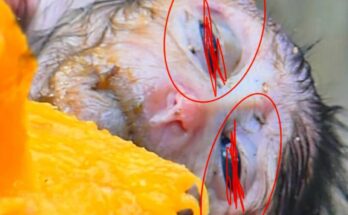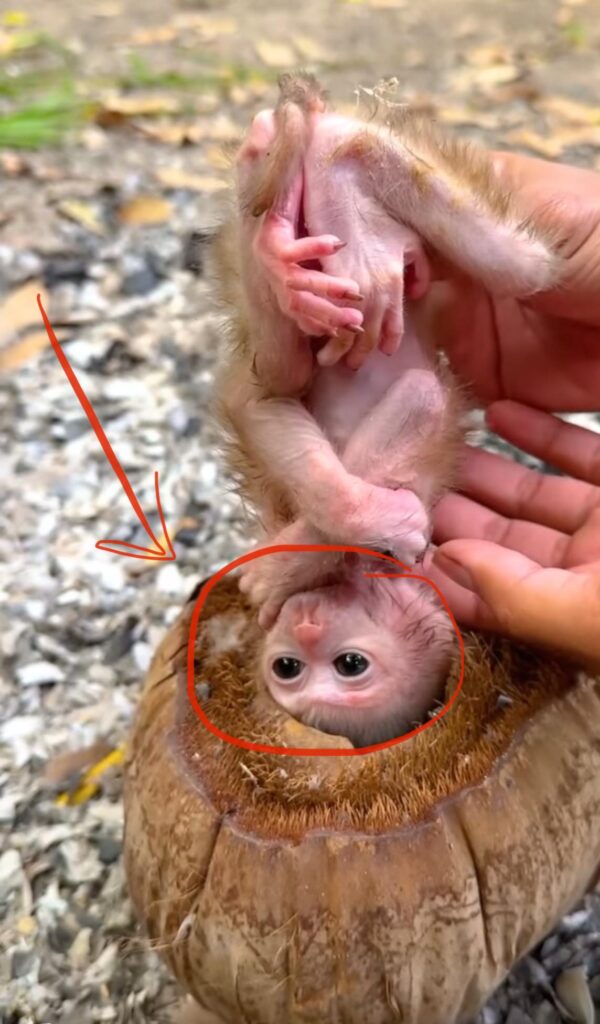
Milk is the most important source of nutrition for a newborn baby monkey. During the first days and weeks of life, a young monkey depends entirely on its mother’s milk for energy, hydration, warmth, and immune protection. If a newborn monkey does not drink milk for as long as 10 hours, the effects can be serious and, in some cases, life-threatening. The impact depends on the infant’s age, health, environment, and whether feeding resumes quickly.
Newborn monkeys are born with very small energy reserves. Unlike adults, they cannot store enough fat or nutrients to last long without food. Milk provides sugars, fats, proteins, vitamins, and minerals that are essential for keeping their bodies functioning. When a baby monkey goes without milk for 10 hours, its blood sugar levels can drop significantly. Low blood sugar can lead to weakness, low body temperature, reduced movement, and difficulty responding to the mother or the environment.
Hydration is another major concern. Milk is not only food but also the primary source of fluids for a newborn monkey. A 10-hour gap without nursing can lead to dehydration, especially in warm or dry environments. Dehydration affects circulation and organ function and can make the infant too weak to nurse even when milk becomes available again. This creates a dangerous cycle where weakness leads to less feeding, and less feeding leads to more weakness.
Temperature regulation is also closely linked to feeding. Newborn monkeys struggle to control their body temperature on their own. The energy from milk helps them stay warm, while close contact with the mother during nursing provides additional heat. Without regular feeding, the baby may become cold more easily, particularly at night or in cooler habitats. Low body temperature slows down the body’s processes and can make recovery harder.
Another important role of milk, especially in the early hours after birth, is immune protection. The first milk contains antibodies that help protect the newborn from infections. If a baby monkey misses several feeding sessions, it may receive fewer of these protective substances. This increases the risk of infections, which can develop quickly in newborns because their immune systems are still immature.
Behavioral changes are often noticeable when a newborn monkey has not fed for many hours. The infant may cry weakly, move less, or stop trying to cling to the mother. In some cases, the baby may appear unusually sleepy or unresponsive. These signs indicate that the body is conserving energy, which is a warning sign rather than a normal state.
There are several reasons why a newborn monkey might not drink milk for 10 hours. The mother may be inexperienced, stressed, injured, or ill. In some situations, the infant may be too weak to latch properly or may be separated from the mother due to environmental disturbances. In captivity, factors such as human handling, enclosure changes, or delayed observation can also interfere with normal feeding.
If feeding resumes after 10 hours, recovery is possible, especially if the newborn is otherwise healthy. Once milk intake restarts, energy levels can improve, and body functions may stabilize. However, the longer the delay continues, the higher the risk of long-term damage or death. This is why early detection and quick intervention are so important in both wild and captive settings.
From a conservation and animal care perspective, monitoring newborn monkeys closely during the first days of life is essential. Caretakers and researchers watch for regular nursing, normal movement, and healthy vocalizations. When problems are noticed early, steps can be taken to support the mother or, in some cases, provide supplemental feeding under professional guidance.
In conclusion, a newborn baby monkey not drinking milk for 10 hours faces serious risks, including low blood sugar, dehydration, weakened immunity, and difficulty regulating body temperature. While some infants may recover if feeding resumes quickly, the situation is always urgent. Milk is not optional for newborn monkeys—it is a lifeline. Understanding this helps emphasize the importance of maternal care, early monitoring, and proper intervention to ensure the survival of these vulnerable young animals.