The miners had been working since dawn, their faces blackened with soot, their movements mechanical from years of routine. Coal carts screeched along metal rails, and the sound of drills echoed through the tunnels. In a world driven by production and survival, compassion often took a back seat. Yet fate has a way of interrupting even the harshest routines.
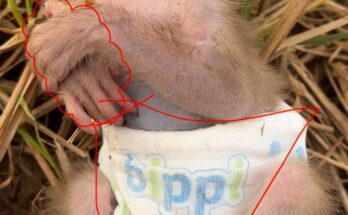
Ramesh, a middle-aged miner who had spent half his life underground, noticed something unusual near a collapsed section of the mine. At first, he thought it was a piece of torn cloth or debris. But when it moved—just slightly—his steps slowed. Kneeling down, he discovered a baby monkey, barely conscious, its fur matted with coal dust and its breathing shallow. Its mother was nowhere to be seen, likely frightened away by explosions or worse, killed by falling rocks.
For a moment, Ramesh hesitated. Rules were strict. Animals did not belong in the mine, and stopping work could mean penalties. But as the baby monkey’s tiny fingers curled weakly around his glove, something stirred in him—an instinct deeper than fear or duty.
He wrapped the baby in his scarf and carried it out of the mine, ignoring the curious stares of his coworkers. Outside, under the open sky, he gently cleaned the monkey’s face with water from his flask. The baby whimpered softly, then calmed, sensing safety for the first time since its ordeal began.
Ramesh took the monkey to his modest home on the edge of the mining town. With no knowledge of animal care, he did what he could—feeding it milk drop by drop and keeping it warm through the night. By morning, word spread, and a local wildlife rescue group was contacted. They arrived quickly, praising Ramesh for his courage and compassion.
The rescuers confirmed that the baby would survive. Though weak, it showed signs of recovery and would eventually be rehabilitated and released into a protected forest. As they prepared to take the monkey away, Ramesh felt a quiet ache. In saving the tiny life, he had formed a bond that transcended words.
In a place defined by darkness, danger, and loss, one simple act of kindness had shone brightly. The coal mine, a symbol of destruction and hardship, became the unlikely setting for a story of hope. And while Ramesh returned to his work underground, he carried with him the knowledge that even in the deepest shadows, humanity can still rise to the surface.