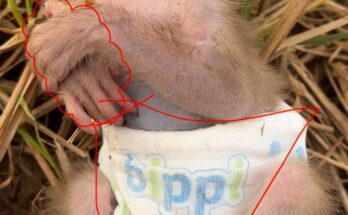
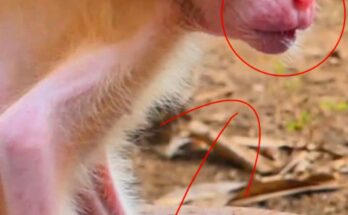
Life in the wild is often romanticized as free and harmonious, but for one newborn monkey, it began in tragedy. Born fragile and helpless, the infant entered a world that offered no time for safety or comfort. Before it could cling tightly to its mother or learn the rhythms of survival, fate intervened with devastating force.
Separated from its mother under unknown and likely violent circumstances, the newborn was left alone—its cries echoing through the forest without an answer. In the wild, a mother is protection, warmth, and food. Without her, the infant’s chances dropped dramatically. Barely able to move, the monkey became an easy target, exposed to hunger, cold, and constant danger.
Predators and even rival animals sensed the vulnerability. The newborn was attacked, its tiny body bearing the marks of a world that does not pause for weakness. Each moment became a struggle between life and death, instinct and exhaustion. Yet, despite its injuries and fear, the infant clung to life, driven by a silent will to survive.
This heartbreaking story is not just about one monkey—it reflects the harsh reality faced by countless animals born into unforgiving environments. In the wild, survival is not guaranteed by innocence or need. It is earned through strength, protection, and often, luck. When one element is missing, tragedy can strike swiftly.
The newborn monkey’s fragile beginning reminds us of nature’s duality: breathtaking beauty intertwined with relentless cruelty. It also calls for compassion and awareness. While the wild follows its own rules, human actions—habitat destruction, poaching, and environmental imbalance—often make survival even harder.
This tiny life, marked by loss and pain from its first moments, stands as a symbol of resilience. Even in the face of overwhelming odds, the will to live can flicker—small, fragile, yet profoundly powerful.