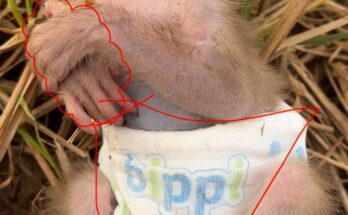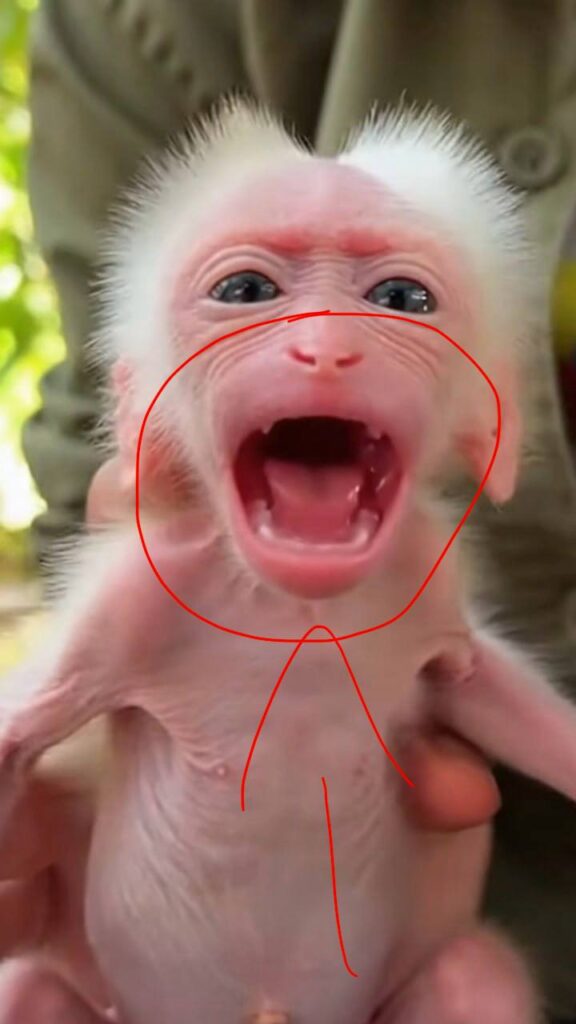
A newborn baby monkey, fragile and newly introduced to the world, represents one of nature’s most vulnerable lives. In its earliest moments, every sensation is new—warmth, touch, sound, and unfortunately, pain. When such a newborn is given an injection of painkillers, the act goes beyond a simple medical procedure; it reflects humanity’s evolving understanding of animal welfare, compassion, and ethical responsibility.
Pain relief in newborn animals is a critical subject in veterinary science and biomedical research. For many years, it was mistakenly believed that very young animals did not experience pain in the same way adults do. Modern science has firmly disproven this. Newborn monkeys possess developing but functional nervous systems capable of feeling discomfort and stress. Administering painkillers can significantly reduce suffering, stabilize vital functions, and support healthy development during critical early stages of life.
The decision to give a painkiller also highlights a broader moral question: how humans choose to care for beings that cannot speak for themselves. Whether the monkey is being treated in a wildlife rescue center, a zoo, or a research setting, pain management demonstrates respect for life and an acknowledgment that suffering matters, regardless of species. It shows a shift from seeing animals as tools or subjects to recognizing them as sentient individuals.
Furthermore, reducing pain has practical benefits. A calm, comfortable newborn recovers faster, feeds better, and has a higher chance of survival. In this way, compassion and science work hand in hand. The simple act of administering pain relief becomes a symbol of progress—proof that knowledge, empathy, and responsibility can coexist.
Ultimately, giving a newborn monkey painkillers is not just about easing physical pain. It is about making a conscious choice to protect the vulnerable and to act with kindness where it matters most.