High above the forest floor, where sunlight filters through trembling leaves and the wind carries the whispers of the wild, a mother monkey sensed that something was wrong. The jungle, usually alive with playful chatter and rustling branches, suddenly felt still. Her baby—small, fragile, and curious about the vast world—was no longer clinging to her side.
Only moments earlier, the infant had been wrapped securely against her chest as she leapt from tree to tree. Like many devoted mothers in the animal kingdom, especially among species such as the Rhesus macaque and the Long-tailed macaque, she rarely let her child out of reach. The bond between mother and baby is not just emotional—it is essential for survival. But curiosity is powerful, and in a fleeting second, the baby had loosened its grip.
A sharp cry pierced the air.
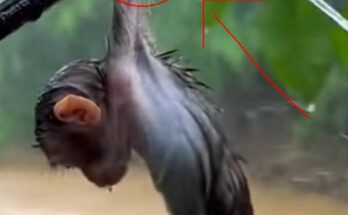
The mother froze. Her heart pounded as her eyes darted downward. There, tangled in low branches and creeping vines, her baby struggled helplessly. The tiny monkey had slipped during an attempted climb and now hung precariously, too frightened to move. Every small whimper sent waves of urgency through the mother’s body.
Without hesitation, she descended.
Her movements were swift but calculated. Each branch had to hold her weight. Each leap had to be precise. The forest floor was not safe—predators lurked, and danger could approach in silence. Yet fear for herself did not exist in that moment. Only one thought consumed her: rescue her baby.
The infant’s cries grew louder as the mother approached. The baby’s tiny fingers clutched at thin vines, its wide eyes filled with panic. It called out again, recognizing the familiar presence of comfort. That sound fueled the mother’s determination.
Reaching the lower branches, she extended one arm carefully. The baby tried to reach back but slipped slightly, causing both of them to freeze. Time seemed suspended. The leaves trembled. Even the birds quieted as if witnessing the fragile drama unfolding beneath the canopy.
With remarkable gentleness, the mother shifted closer. She wrapped her tail firmly around a sturdy branch for balance and leaned forward once more. This time, her hand grasped her baby’s arm. A soft, reassuring sound escaped her lips—a calming murmur known only between mother and child.
In one swift motion, she pulled the baby into her chest.
The infant clung tightly, burying its face in her fur. Its cries softened into small, shaky breaths. The mother held the baby there for several long seconds, as if memorizing the feeling of its heartbeat. Her body formed a protective shield, daring the world to threaten her child again.
But the rescue was not over. She still had to climb back to safety.
Cradling the baby securely against her body, she began her ascent. Each movement was slower now, more deliberate. The baby’s tiny fingers tightened around her fur, unwilling to risk another slip. Above them, the canopy seemed welcoming once again, branches stretching like open arms.
When she finally reached the higher limbs of their familiar territory, the mother paused. She groomed the baby gently, checking for injuries, brushing away dirt and leaves. The infant responded with soft coos, reassurance replacing fear.