Caring for a baby monkey after a head injury is a serious responsibility that requires calm action, compassion, and an understanding of your limits. Head injuries can be life-threatening, especially for young animals whose brains and bodies are still developing. This guide focuses on humane, responsible care and emphasizes the importance of professional veterinary help.
1. Prioritize Safety for Both You and the Monkey
Before approaching an injured baby monkey, make sure the environment is safe. Remove nearby hazards such as sharp objects, loud noises, or other animals. Even a gentle baby monkey may react unpredictably when scared or in pain, so move slowly and speak softly. Avoid restraining the monkey unless absolutely necessary, as stress can worsen the injury.
2. Observe Without Panicking
Carefully observe the monkey’s behavior without excessive handling. Warning signs of a serious head injury can include unusual sleepiness, confusion, poor balance, weakness, or changes in eye movement. Crying or unusual silence can also signal distress. Do not shake the monkey or try to “wake it up” forcefully—this can cause further harm.
3. Keep the Monkey Warm and Comfortable
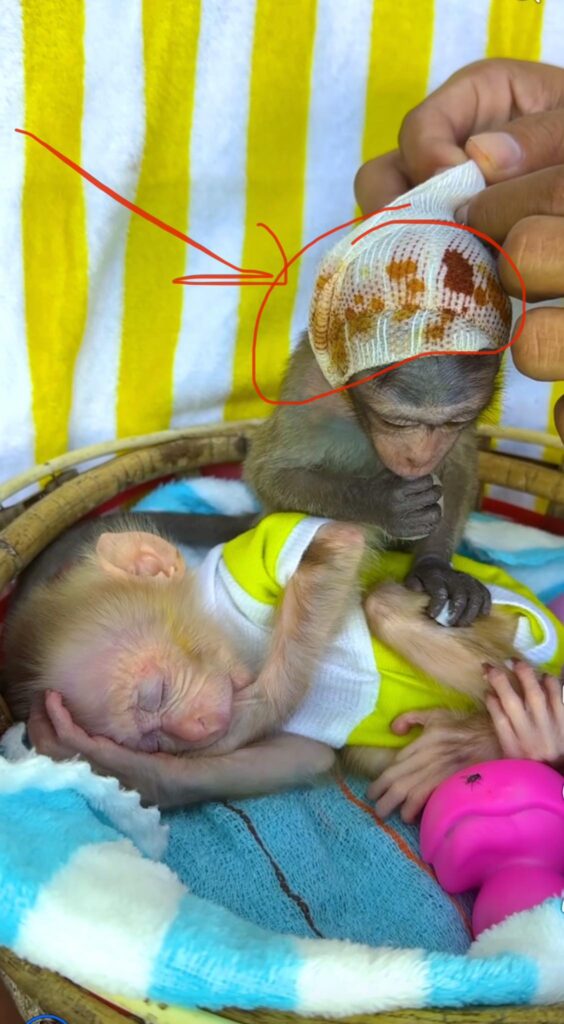
Young monkeys are very sensitive to temperature changes. Place the baby in a clean, soft cloth or towel and keep it warm, but not overheated. A quiet, dim area helps reduce stimulation, which is important after a head injury. Limit handling to what is strictly necessary.
4. Do Not Attempt Home Treatments
It is critical not to give human medications or attempt any medical procedures. Painkillers, herbal remedies, or home treatments can be dangerous or fatal for monkeys. Do not press on the head, attempt to clean deep wounds, or try to “set” anything yourself. Head injuries require professional assessment, even if the monkey appears calm.
5. Watch for Changes
While waiting for professional help, monitor the monkey closely. If symptoms worsen—such as increasing weakness, difficulty breathing, or loss of responsiveness—this indicates an emergency. Keep notes of what you observe, including the time of injury and any changes in behavior. This information can be very helpful for a veterinarian or wildlife specialist.
6. Seek Professional Help Immediately
A veterinarian experienced with exotic animals or a licensed wildlife rehabilitator should evaluate any head injury in a baby monkey. If the monkey is wild or not legally owned, contact a wildlife rescue organization right away. They have the training, equipment, and legal authority to provide proper care and rehabilitation.
7. Understand Legal and Ethical Responsibilities
In many places, it is illegal to keep or treat wild monkeys without proper permits. Even when intentions are good, improper care can lead to suffering or long-term disability. The most humane choice is always to involve trained professionals who can give the monkey the best chance of recovery.
8. Focus on Long-Term Well-Being
Recovery from a head injury may take time and ongoing monitoring. Some monkeys may need specialized rehabilitation, controlled diets, or limited activity during healing. Social and emotional needs are also important—young monkeys rely heavily on proper care and interaction appropriate to their species.
Conclusion
Caring for a baby monkey after a head injury is not about “fixing” the problem yourself—it is about protecting the animal, minimizing harm, and acting quickly to get expert help. Compassion, patience, and responsibility are the most important tools you can offer. When in doubt, always choose professional care, as it gives the baby monkey the safest and most humane path to recovery.