At dawn, the tangled roots usually hummed with life—crabs scuttling across slick bark, birds crying overhead, and monkeys leaping fearlessly from branch to branch. But on this morning, something was wrong. The tide was rising faster than expected, swallowing the muddy ground in cold, creeping waves.
She had only gone down for a moment.
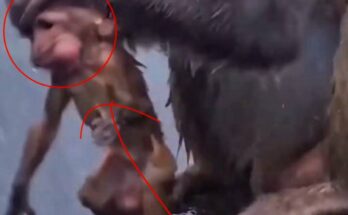
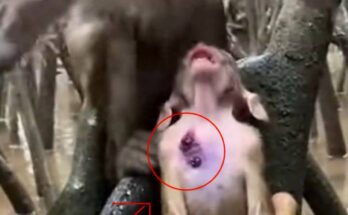
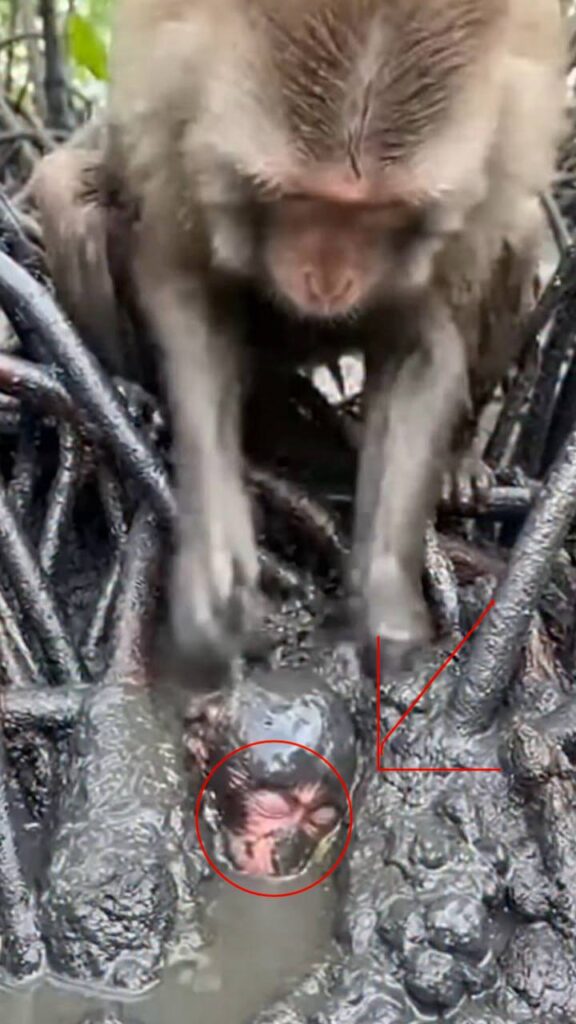
The mother macaque had climbed from the safety of her perch to gather fallen fruit for her infant. One careless step sent her plunging into the thick mangrove mud below. It swallowed her leg instantly, trapping her in a suction grip that tightened the more she struggled. Above her, her baby clung to a low branch, shrieking in confusion.
The water surged around her waist.
Mangrove mud is deceptive—soft on the surface, but beneath it lies a dense, clinging trap formed by silt and tangled roots. Each movement pulled her deeper. She tried twisting, pulling, clawing at the mud with frantic hands. The tide licked at her chest now, salty and relentless.
She could not climb.
She could not run.
But she would not give up.
With one final burst of strength, she reached toward an exposed root and wrapped her fingers around it. The bark cut into her palms as she pulled with everything she had left. Inch by inch, the mud released its grip. The water rose to her shoulders—then her chin.
And then, suddenly, she was free.
Soaked and shaking, she scrambled upward, gathering her terrified baby into her arms as the tide swallowed the spot where she had nearly disappeared.
In the mangroves, survival is never guaranteed. But that day, a mother’s love proved stronger than the rising sea.